There’s a moment on both treks where everything goes quiet.
Two of the most famous and challenging treks in Peru—the Inca Trail and the Huayhuash Circuit—offer completely different experiences in the Andes. Both treks offer stunning views, a chance to explore unique cultures, and the opportunity to immerse yourself in breathtaking natural environments. However, they are quite different in terms of terrain, altitude, and overall experience.
On the Inca Trail, it’s early morning. You’ve climbed in the dark, your legs are tired but buzzing, and then the clouds part just enough to reveal Machu Picchu for the first time. People go silent. Cameras come out. Someone inevitably tears up.
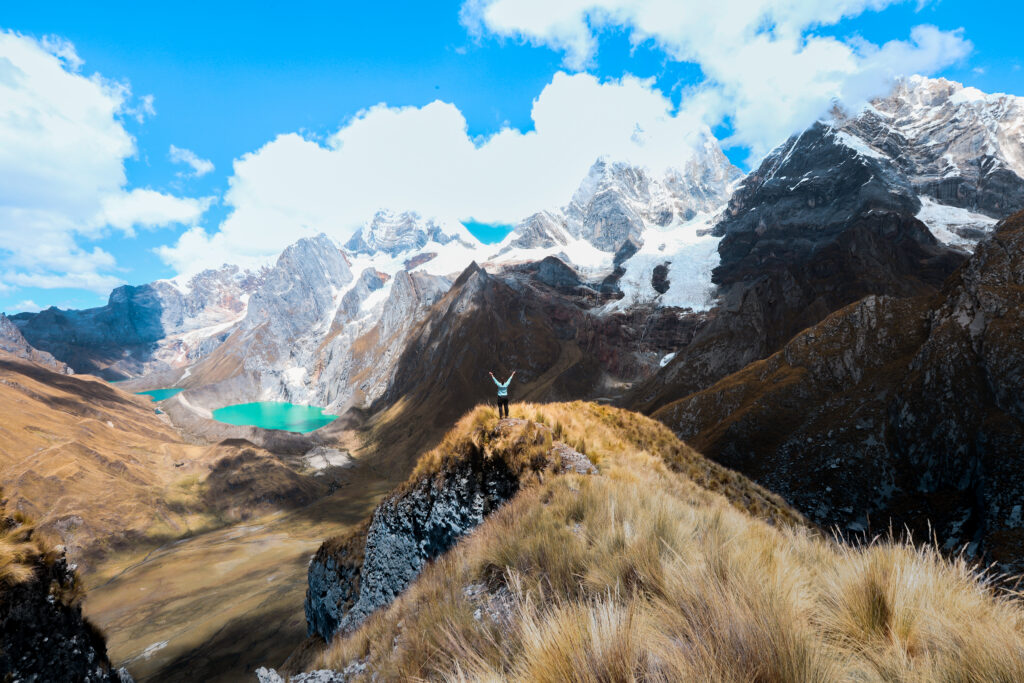
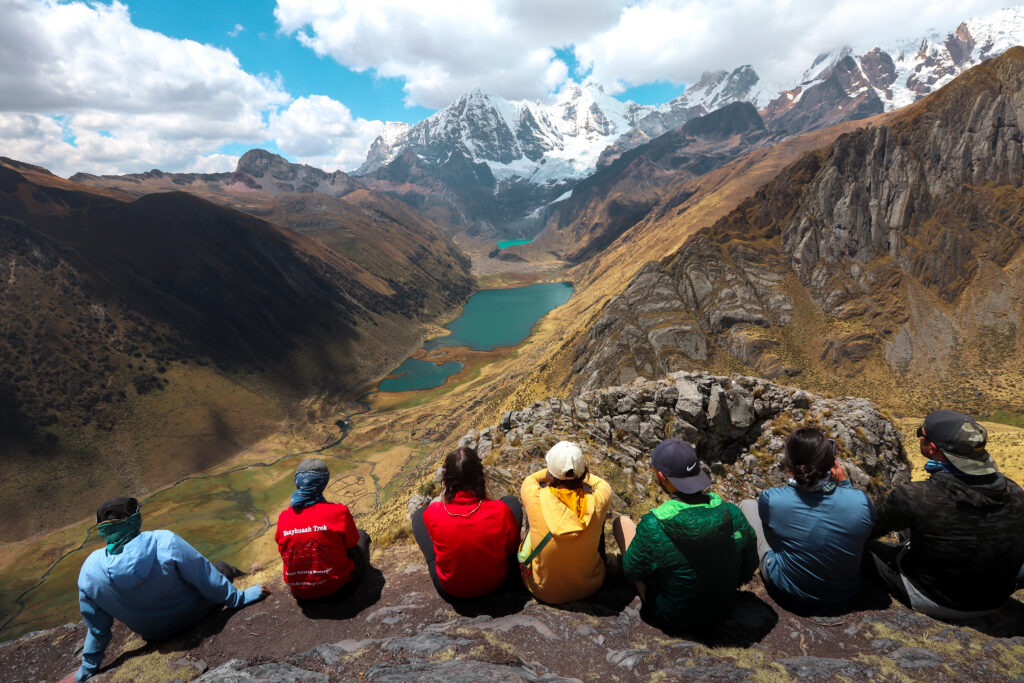
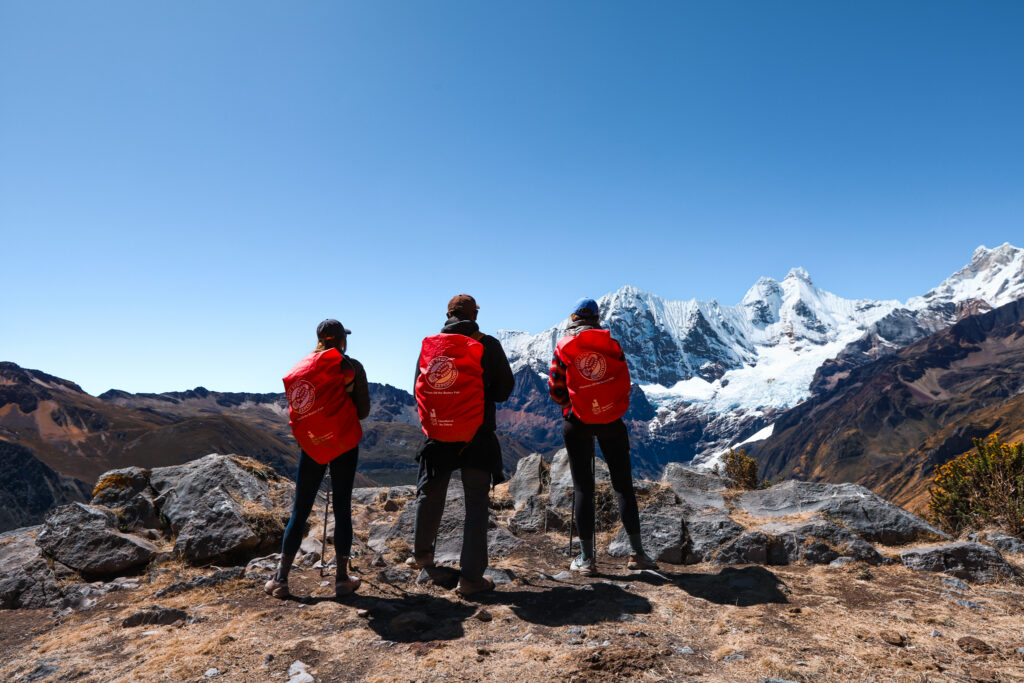
Meanwhile, on the Huayhuash Trek, it’s sunset. You’re standing on a high pass—wind cutting across your face, lungs working a little harder at altitude—and in every direction there are mountains. Not one or two. A full 360° wall of jagged peaks, glaciers, and lakes that don’t look real. And there’s almost no one else around.
Same country, completely different feeling.
So if you’re trying to decide between the Huayhuash Trek and the Inca Trail in 2026, this isn’t really about which one is “better.” It’s about what kind of experience you’re actually looking for.
The Short Answer — If You’re Skimming
If you want Machu Picchu + history + a classic, more conventional trek → choose the Inca Trail
If raw mountains, fewer people, and a real challenge is more your speed → choose Huayhuash
Have a few more minutes? Here’s a more detailed breakdown that actually helps you decide ⬇⬇⬇
What the Experience Feels Like
The Inca Trail: A Journey With a Destination
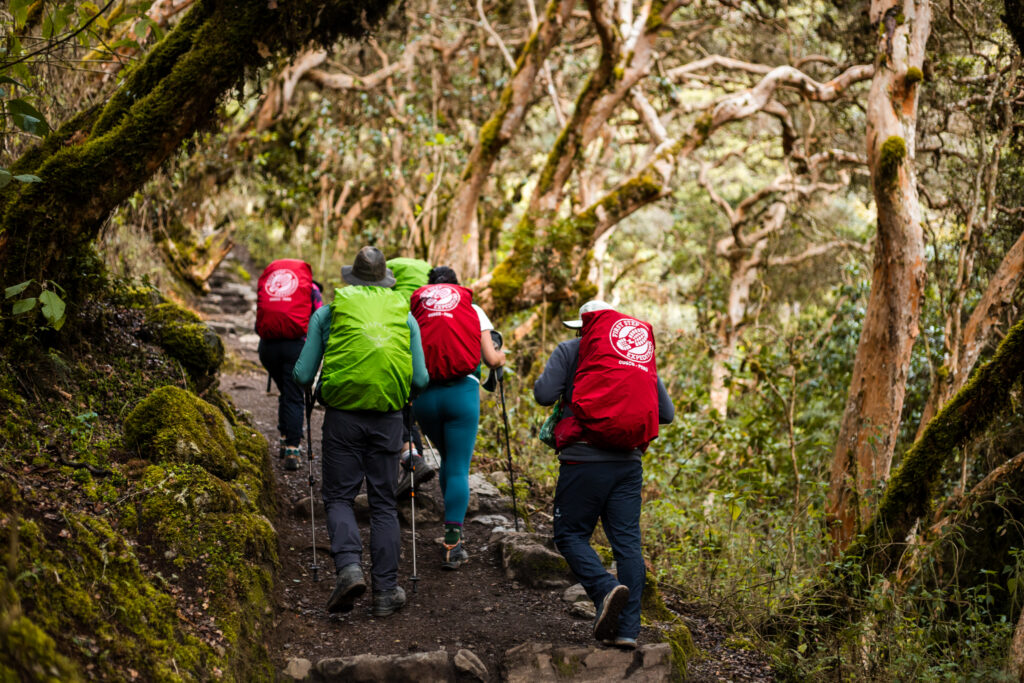
The Inca Trail is a story that builds toward an ending you already know is going to be good. You’re walking through the Andes and the cloudy forest, passing ruins that have been there for centuries, climbing stone steps that were laid long before any of us showed up with trekking poles and Gore-Tex. There’s a rhythm to it. Camps are set, meals are ready, everything is dialed in.
And then, on the final day, you arrive at Machu Picchu. It’s iconic for a reason. It delivers every time.
But you’re not alone. Even with permit limits, there are people—other groups, porters moving quickly past you, a shared sense that you’re all on the same path toward the same moment. You may enjoy the group mentality, you may not.
Cordillera Huayhuash Circuit: Pure Wilderness, No “Finish Line”
Huayhuash doesn’t have a grand finale like Machu Picchu. There’s no single moment where you “arrive.” Instead, it just keeps giving.
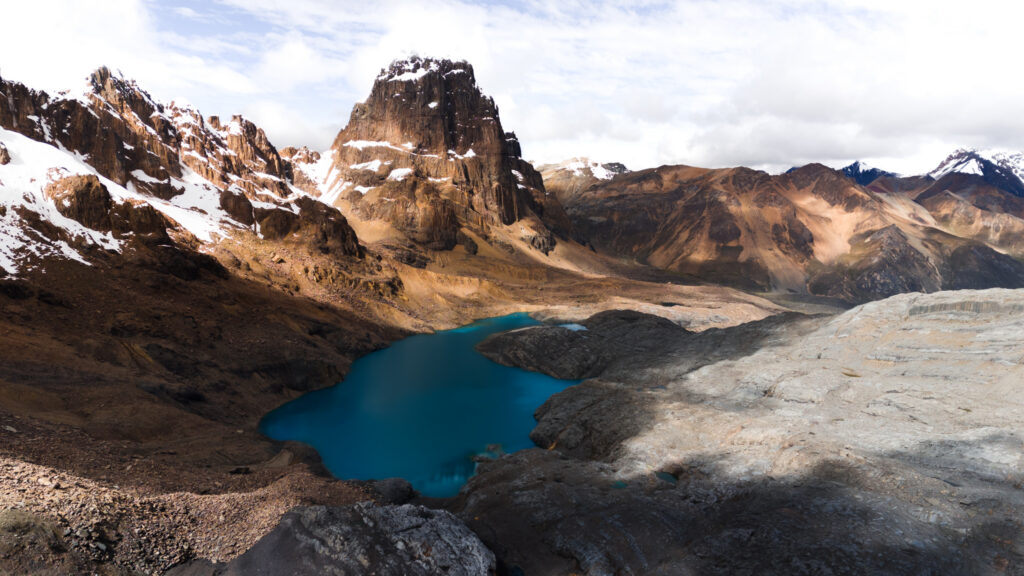
- Boom! a turquoise lake that looks photoshopped.
- Pow! a ridge-line with peaks stacked in the distance.
- OMG! a quiet campsite where the stars feel closer than they should.
It’s still an organized trek, but it’s significantly less curated. More raw. And yes—harder. You earn every view out there for sure.
Let’s compare the stats, side-by-side:
| Inca Trail | Huayhuash Circuit | |
|---|---|---|
| Location | Cusco Region, an amazing journey to the ancient Lost city of the Inca in southern Peru. | Huaraz Region. Taking in breathtaking landscapes of three regions: Lima, Huánuco and Ancash in northern of Peru. |
| Distance/Duration | 42km over 4 Days | 115-130km over 8 Days – optional “extra” hikes along the way can add distance if you’re up for it. |
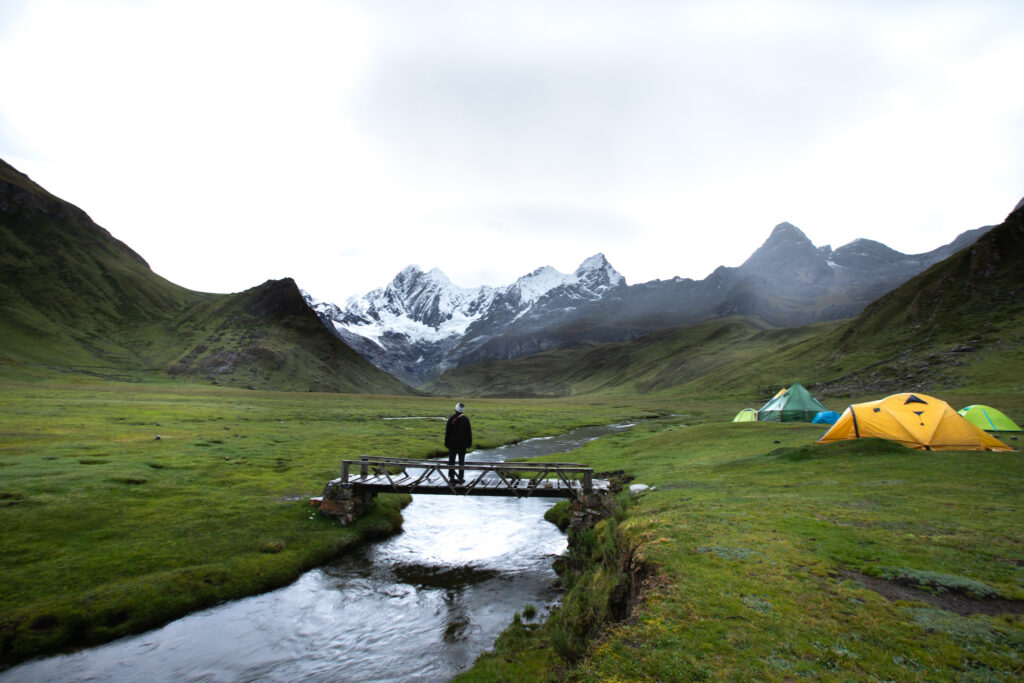
| Terrain/Weather | The terrain is a mix of steep stone steps, rocky paths, which can be tough on your knees, and dense jungle, The weather is unpredictable and tends to changes throughout the trek, from sunny and warm in the valleys to cold at night, and windy at higher elevations. | The terrain is steep, rocky paths, and narrow trails. You will pass through remote villages, cross small suspension bridges, and walk on rugged paths, camping on the side of the lakes, all while enjoying breathtaking views of snow-capped peaks, and endless view valleys. The weather is also unpredictable and tends to changes throughout the trek, from sunny and warm in the valleys to cold at night, and windy at higher elevations. |
| Altitude/Acclimatization | One of the biggest challenges adventure seekers face is the altitude. The highest point is Dead Woman’s Pass 4,215 m/13,828 ft. While it’s not as high as Huayhuash, the altitude can still cause difficulty for some trekkers. It’s important to take it slow and acclimatize properly for at least 2 days in Cusco. | The highest altitude we reach is 5,010 meters (16,437 feet), which is a significant height. Due to the high altitude, we highly recommend arrive to Huaraz 2-3 days prior your trek. Acclimatization is an important part of the journey. Some of these choices might help you acclimatize with the altitude from Huaraz. |
| Cultural Highlights | Hiking the Inca trail to Machu Picchu is a once in a lifetime experience. You’ll explore with a knowledgeable tour guide who will tell you all the Inca ruins. The Inca Trail is a perfect combination of culture, nature, and adventure, making it unique and one of the most popular treks in the world. | You might notice quickly that our guide, chef, porters and horsemen speak Quechua – the native Inca language – with all the communities we will pass along the way. Keeping this ancient language alive is critical to all Peruvians. These interactions add to the unique charm of the Andes, making it not only a physical challenge but also a cultural journey. |
| Difficulty (more details below) | Challenging | Difficult |
| Cost | $800 join a group trek. $2500-$3000 for a private trek. | $750 to join a group trek $2,000-$2500 for a private trek |
| Crowds – This is one of the biggest differences people don’t fully think through. | Even with permit limitations, you’ll feel the presence of other groups. | There are stretches where it’s just you, your group, and the landscape. For some people, that solitude is the whole point. For others, it can feel a little intense. |
| Regulations | There is no way you can do Inca trail by yourself. It requires a licensed tour operator + licensed tour guide and porters as well. The Inca Trail is heavily regulated by the Peruvian government and the National Park (SERNANP). It is mandatory for tour companies to hire at least two porters per trekker with heavy restrictions on the weight of gear. | Beginning in 2026, you can no longer hike the Huayhuash Circuit by yourself. The circuit is now regulated by the local communities of Lima, Huánuco, Ancash and MINCETUR. It now requires a licensed tour operator + licensed tour guide. |
| Booking | Strict permit cap of 500 per day from March-January. Permits sell out 6–8 months in advance (sometimes faster for peak dates) | More flexible, no strict daily permit caps. If you’re planning late or want flexibility, Huayhuash gives you more breathing room. |
More About Difficulty
The Inca Trail
Challenging but very doable for most people with decent fitness. There are a ton of stone steps and one tough altitude day (Day 2- Dead Woman’s Pass 4,215m/13,828 ft.), but the overall structure, pacing, and support make it accessible.
The Huayhuash Circuit
Significantly harder if you are beginner. We cannot stress this enough – This isn’t a casual hike. You want to show up prepared. You’re dealing with:
- Multiple high passes (often above 4800m- 5100m / 15,748 ft-16,732 ft).
- Long hiking days (6-8 hours every day)
- Less infrastructure and fewer easy exit points
If you’re newer to trekking or traveling with a mixed-experience group, the Inca Trail is usually the safer call.
Scenery
This is where it really comes down to preference.
The Inca Trail gives you more variety:
- Cloudy forest
- Jungle sections
- Archaeological sites along the way
- And of course, Machu Picchu at the end.
Huayhuash is all about big mountain energy:
- Glacial lakes
- Snow-capped peaks (some of the highest in Peru)
- Wide, open valleys
- It’s consistent—and consistently impressive from beginning to end.
If you’re the type who wants changing environments and cultural context, the Inca Trail wins.
If you want to be surrounded by mountains all day, every day—Huayhuash is hard to beat.
What’s your price range?
Inca Trail: Typically, $800–$1,200 per trekker for a group trek; $2000-$3000 per trekker for a private trek for 4 days, The cost includes logistics, round-trip transportation, tickets for the Inca Trail + Machu Picchu, train tickets, porters, chef, Guide, equipment, and food on the trek.
Huayhuash: Typically, $750 per trekker for group treks; $2,000 – $2500 per trekker for a private trek for 8 days. The cost includes logistics, round-trip transportation, entrance tickets, horses, porters, chef, Guide, equipment, and food on the trek.
Where Huayhuash gets more premium is in the experience itself—smaller groups, more personalized logistics, better food, etc.
So…Which One Should You Actually Choose?
When deciding between the Huayhuash Circuit and the Inca Trail trek, it’s important to consider what kind of adventure you’re looking for.
Choose the Inca Trail if you:
- Have your heart set on Machu Picchu
- Want a shorter, structured experience
- Like the idea of history woven into the trek
Choose Huayhuash if you:
- Want something that feels more off-the-beaten-path
- Are okay with (or excited by) a physical challenge
- Care more about landscapes than landmarks
And if you’re torn?
A lot of people end up doing both!
Neither of these is a “wrong” choice. They’re just different kinds of memorable.
One gives you a finish line you’ve seen in photos your whole life. The other gives you a week of moments that don’t quite translate on camera—but stick with you long after you leave.
Final Thought
No matter which trek you choose, we will guide you every step of the way for an unforgettable experience.
First Step Expeditions a trusted local company with 20 years of experience. We are experts in offering the Inca Trail and the Huayhuash Circuit. We take care of every detail – allowing you to focus on the stunning views and cultural experiences from the moment you start your journey.
One of the key aspects that sets us apart is our commitment to safety. Our expert guides are trained in first aid and have extensive knowledge of the trail, making sure you’re always in good hands. They also provide high-quality equipment to ensure comfort throughout the trek, including tents, sleeping mats, and nutritious meals.
Choosing us for your next adventure means you’ll be guided by professionals, travel sustainably, and experience the magic of the Peruvian Andes in a safe and responsible way.