Two years. That’s how long we have been doing group, guided excursions in the North of Peru. But from the moment we went to explore the Huayhuash Circuit on our own four years ago, we fell in love.
It’s not just the landscapes or the turquoise glacial lakes. It’s the remoteness. The silence. The feeling of standing in a place that still seems untouched by the crowds you find on many of Peru’s better-known trekking routes.
For us, the Huayhuash Circuit is one of the most spectacular trekking experiences in Peru—and after years of hiking these trails, it still manages to surprise us.
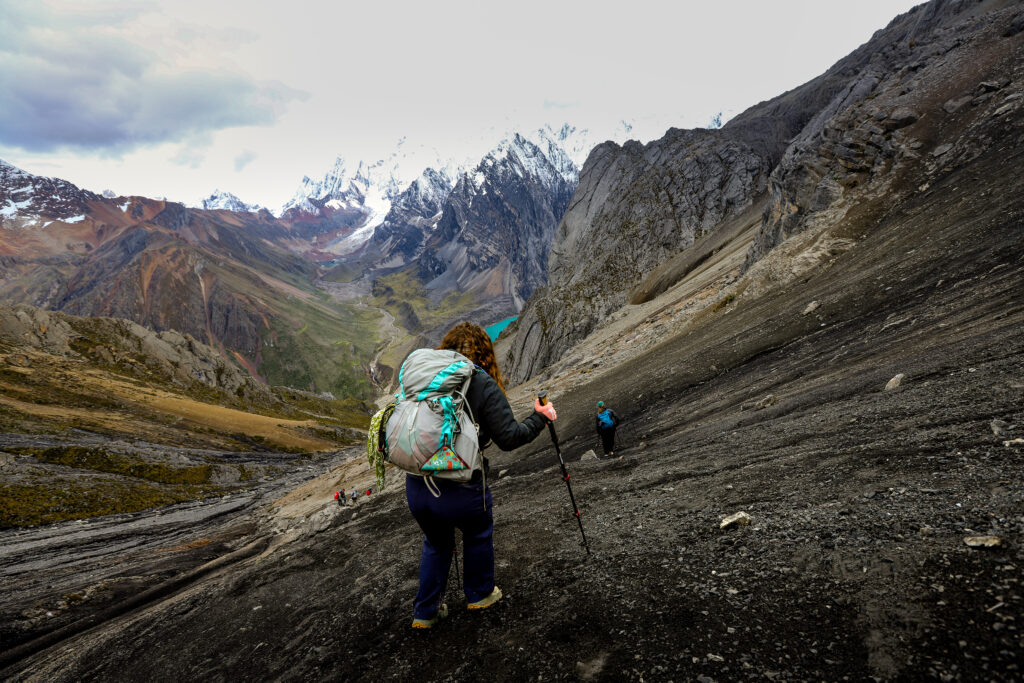
What Makes the Cordillera Huayhuash the best of Peru Trekking?
The Cordillera Huayhuash is located across three regions of Peru: Áncash, Huánuco, and Lima.
The Cordillera Huayhuash Reserved Zone is part of Peru’s national protected-area system and is administered by SERNANP (Servicio Nacional de Áreas Naturales Protegidas por el Estado).
SERNANP lists the Huayhuash Reserved Zone as covering approximately 67,590 hectares. It was established in 2002 to help conserve the region’s high-mountain ecosystems and exceptional landscapes.
But statistics don’t really explain Huayhuash.
What makes this place special is what happens when you actually walk through it: enormous snow-covered peaks rising almost vertically from the valleys, turquoise lakes below glaciers, remote villages, herds of alpacas, and high mountain passes where you can look around and see almost nothing created by humans.
How Long Is the Cordillera Huayhuash?
The Cordillera Huayhuash mountain range itself is relatively compact—approximately 30 km (19 miles) from north to south and lies entirely within Peru.
The trekking circuit, however, is much longer.
A classic Huayhuash Circuit trek generally covers around 120–130 km (75–80 miles), depending on the route and optional side trips.
That’s because you aren’t simply walking from one end of the mountain range to the other. You’re making a circuit around the massif, crossing multiple high-altitude passes along the way.
What is the Difference Between the Huayhuash 8-Day and 12-Day Circuits?
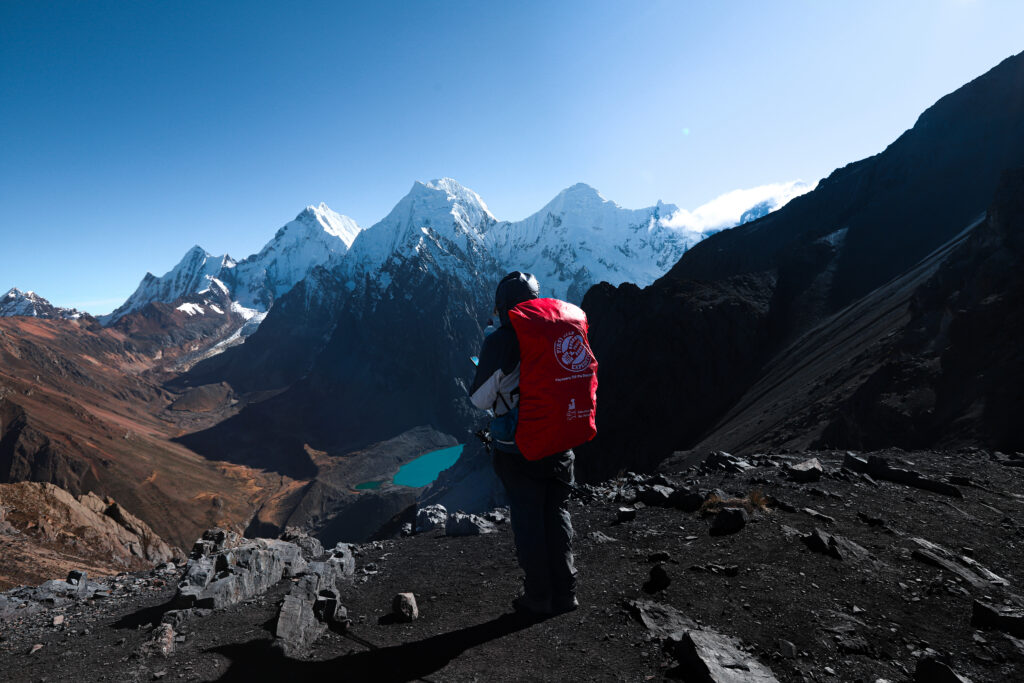
We get asked this question all the time: Is the 12-day Huayhuash trek better than the 8-day trek?
Not necessarily.
Let’s be clear about one thing: an 8-day Huayhuash itinerary can still take you through the core landscapes that make this trek famous.
You’ll see places like Yerupajá, Siula Grande, the Three Lakes viewpoint, Siula Pass, Trapecio Pass, San Antonio Pass, enormous Andean valleys, turquoise glacial lakes, and spectacular campsites.
On the 8-day trek, you are moving almost every day. Most trekking days cover approximately 9–15 km, with around 6–8 hours of hiking, depending on your pace and the terrain.
Most groups arrive at camp sometime around 1:00–3:00 p.m., which still leaves time to rest, explore the campsite, take photos, or simply sit outside your tent and enjoy where you are.
And something that often surprises people: a 12-day Huayhuash itinerary is not automatically easier.
Some longer itineraries use more difficult alpine routes or add challenging side trips. Depending on the itinerary, you may actually spend longer hiking on certain days.
The biggest difference is that longer itineraries can add extra nights and destinations such as Viconga and its hot springs, Cutatambo Valley, Cuartelhuain, and additional time at Jahuacocha Lake.
So which one should you choose?
If your goal is to experience the famous scenery of the Cordillera Huayhuash but you don’t have two weeks available, eight days is enough to experience an incredible amount of the circuit.
If you have extra time, enjoy slower travel, want additional side trips, or you’re a photographer who wants more time waiting for perfect light and weather, a longer itinerary may be worth considering.
You don’t need 10–12 days just to see what makes Huayhuash spectacular.
A Mountain Range Unlike Any Other

The Andes began forming tens of millions of years ago as tectonic plates beneath the Pacific Ocean were forced beneath the South American Plate.
Over millions of years, geological forces helped create the dramatic peaks we see throughout the Andes today.
In the Cordillera Huayhuash, those forces produced an especially dramatic landscape: isolated towers, steep rock faces, glaciers, deep valleys, and brilliant turquoise lakes.
Mountains such as Yerupajá, Jirishanca, and Siula Grande rise sharply above the surrounding landscape, creating the jagged skyline that makes Huayhuash instantly recognizable.
Wildlife You May See on the Huayhuash Circuit
The Cordillera Huayhuash is much more than snow-covered mountains and turquoise lakes. The high Andes are home to an incredible variety of wildlife.
Some of the animals you may encounter include:
- Vicuñas — Wild relatives of llamas and alpacas that can sometimes be seen grazing on open mountain slopes.
- Andean deer (taruca) — Native high-altitude deer that are much more difficult to spot.
- Andean foxes — Occasionally seen in the puna and valleys.
- Vizcachas — One of our favorite Huayhuash residents. They look a little like a cross between a rabbit and a squirrel and live among rocky slopes and cliffs.
- Andean mountain cats — Extremely rare and elusive. I have personally never seen one, although local villagers have reported seeing them, particularly in the mornings and afternoons.
- Andean skunks — Not commonly spotted by trekkers, but sometimes you can smell them before you see them!
- Andean condors — One of the most exciting birds to see soaring above the valleys and mountains, although sightings are never guaranteed.
- Mountain caracaras — Large and distinctive birds of prey that are much more commonly encountered.
- Andean geese — Common around wetlands, lakes, and open puna.
- Andean ducks and other waterbirds — The many lakes and wetlands of Huayhuash support several species.
- Giant coots — Found on high-altitude Andean lakes. Their enormous mound-like nests can sometimes be easier to spot than the birds themselves.
- Hummingbirds and smaller Andean birds — Particularly as the trail descends into lower valleys with more vegetation, such as around Huayllapa.
You’ll also see plenty of domesticated animals along the route, particularly alpacas, llamas, sheep, cattle, horses, and donkeys.
They may not technically be wildlife, but they are very much part of the Huayhuash landscape.
Hiking the Cordillera Huayhuash: Our 8-Day Experience
So what do you actually see while trekking the Huayhuash Circuit?
These are some of the highlights that make our 8-day Huayhuash trek one of our favorite adventures in Peru.
JIRISHANCA VIEWPOINT
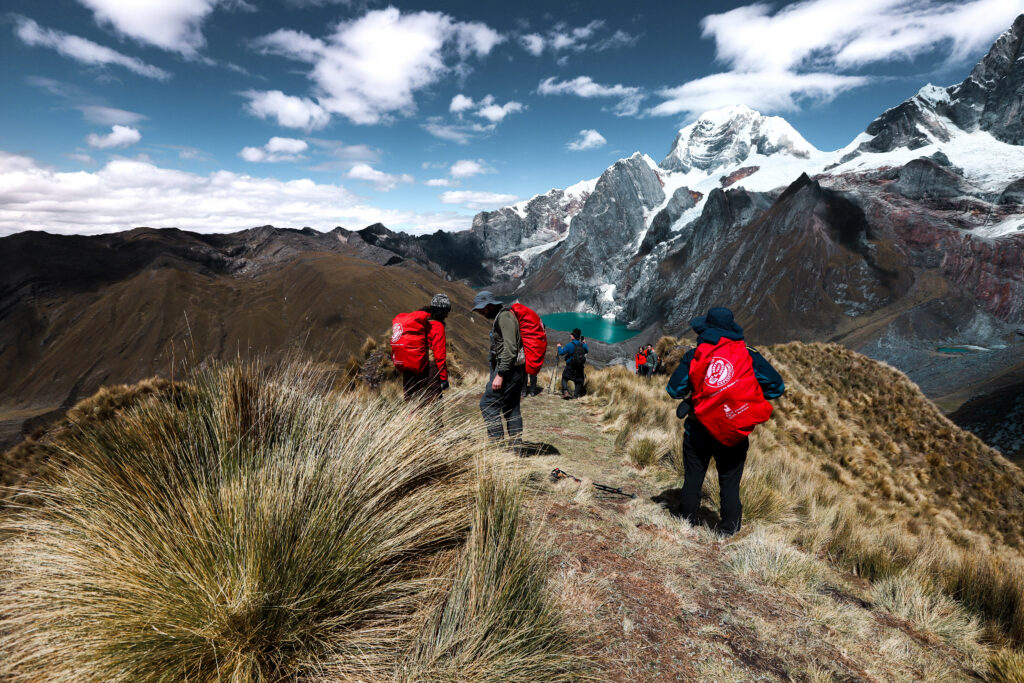
Jirishanca is sometimes called the “Matterhorn of the Andes” because of its distinctive pyramid-like shape.
The viewpoint offers one of the most impressive panoramas in the Cordillera Huayhuash. Jirishanca’s steep, ice-covered summit rises dramatically above the surrounding valleys and glacial landscape.
At 6,094 meters, Jirishanca is one of the range’s most recognizable—and technically difficult—peaks.
On a clear day, the combination of jagged mountains, glaciers, turquoise lakes, and the enormous valley below makes this one of those places where you want to stop for a while rather than simply take a photo and keep walking.
CARHUACOCHA LAKE
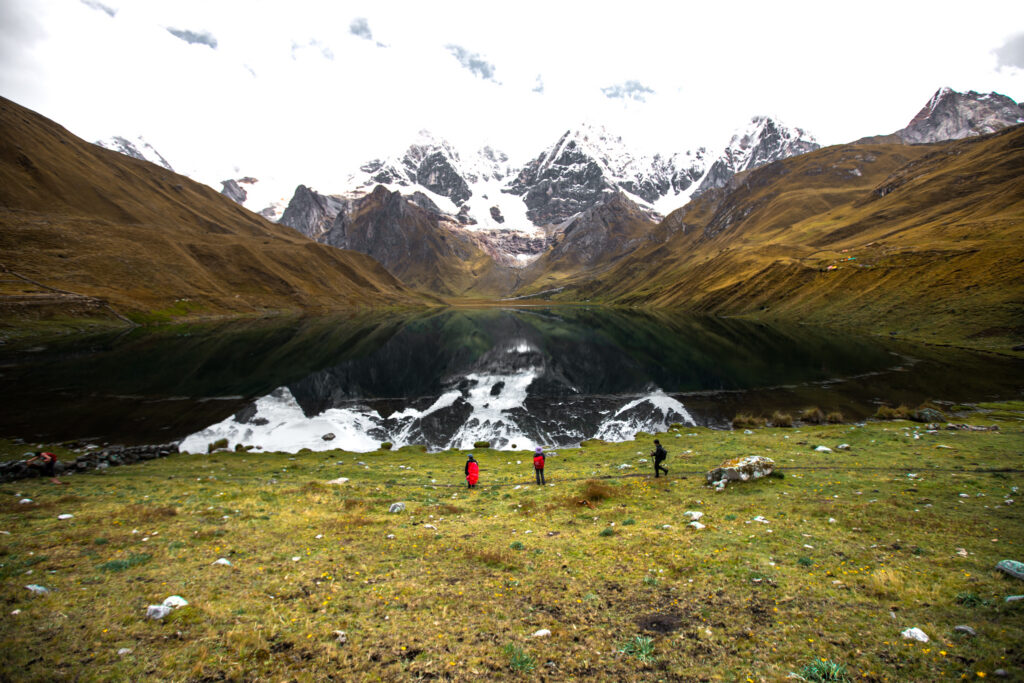
Carhuacocha is one of the signature campsites of the Huayhuash Circuit.
The campsite sits beside Laguna Carhuacocha at approximately 4,150 m (13,615 ft), with enormous snow-covered peaks rising across the lake.
This is the kind of campsite people imagine when they dream about trekking Huayhuash.
Your tent sits beside the deep-blue water while some of the range’s most impressive peaks—including Yerupajá, Siula Grande, and Jirishanca—tower across the valley.
As evening arrives, the mountains can reflect across the lake. Then, on a clear morning, sunrise begins lighting the glaciers and peaks directly in front of camp.
At more than 4,000 meters above sea level, it feels remote, wild, and completely surrounded by the Andes.
MIRADOR DE 3 LAGUNAS
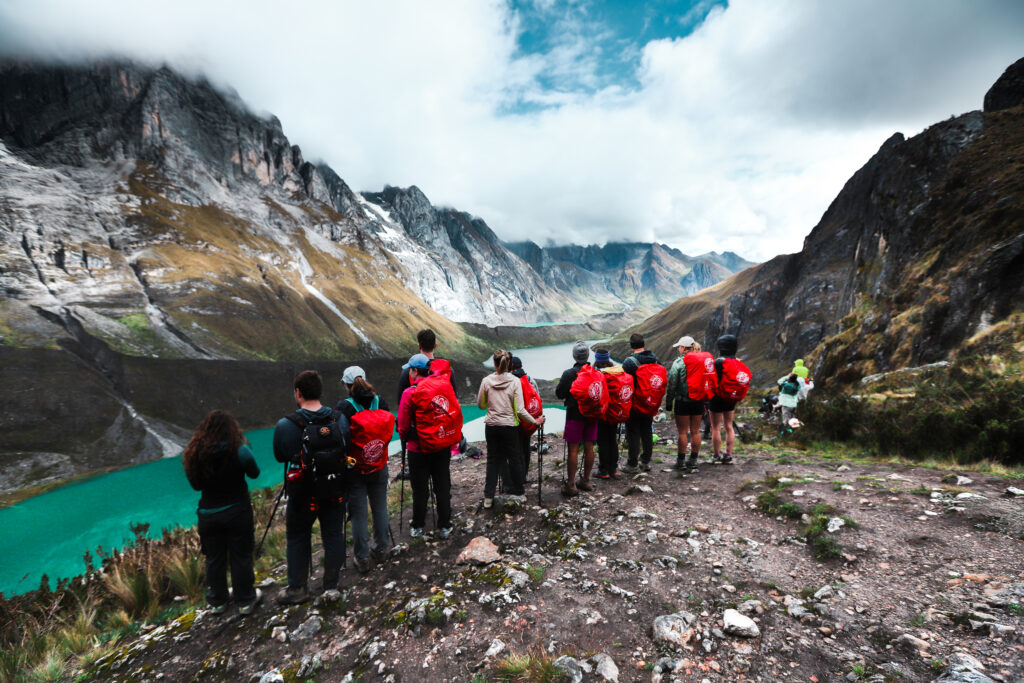
Mirador de las Tres Lagunas is arguably the most iconic viewpoint on the entire Huayhuash Circuit.
From above, you look down over three spectacular glacial lakes: Laguna Siula, Laguna Quesillococha, and Laguna Gangrajanca—each a slightly different shade of turquoise and blue—while the massive peaks and glaciers of the Huayhuash rise behind them.
The climb to the viewpoint is challenging, but this is one of those views that explains why the Cordillera Huayhuash is considered one of the world’s great high-altitude trekking destinations.
SIULA PASS
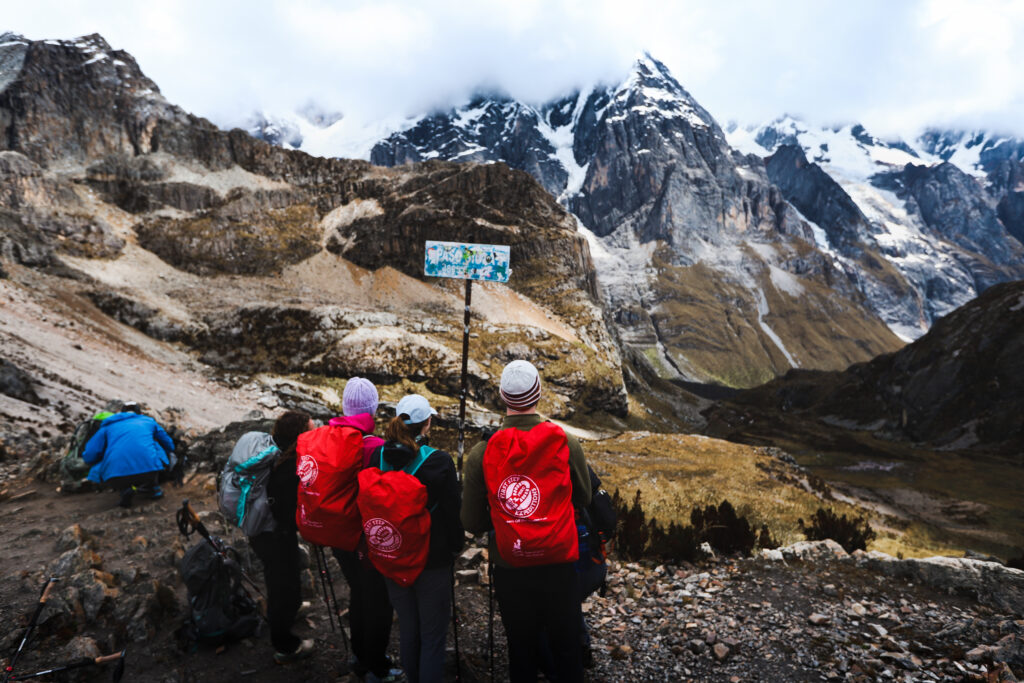
Siula Pass is one of the highest and most rewarding crossings of the Huayhuash Circuit.
At approximately 4,800 meters (15,750 feet), the pass rewards a challenging climb with sweeping views across the rugged Cordillera Huayhuash—glacial valleys, turquoise lakes, and towering snow-covered peaks stretching across the horizon.
Standing at the top, surrounded by the high Andes, gives you a true sense of just how remote and immense this landscape really is.
TRAPECIO PASS
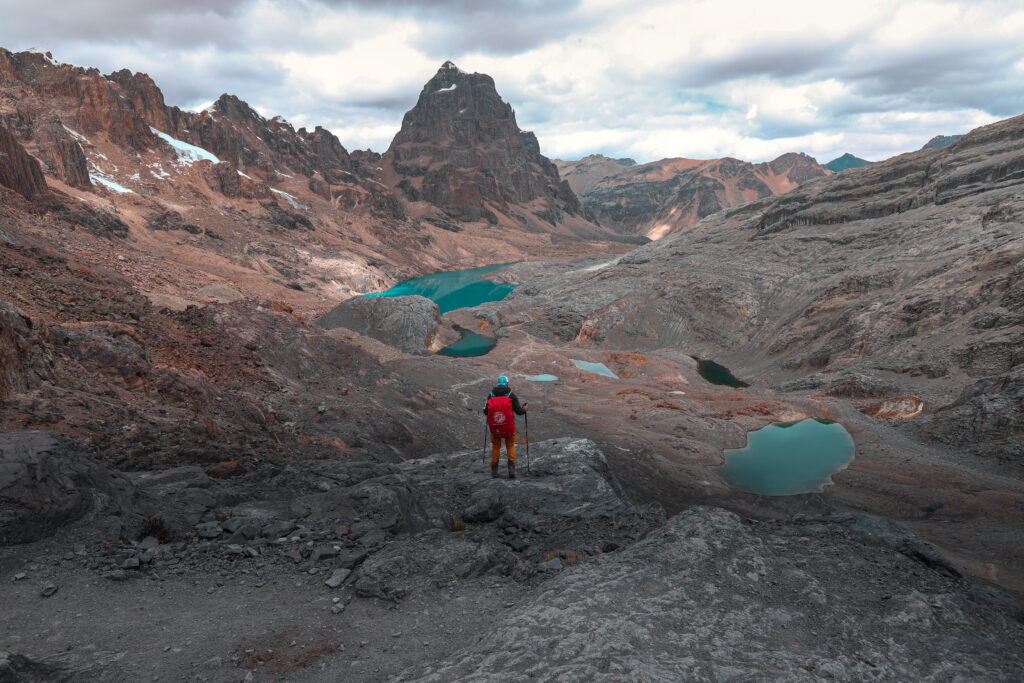
Trapecio Pass is one of the most dramatic high-altitude crossings of the Huayhuash trek.
Climbing to around 5,000 meters (16,400 feet), the trail passes through a stark landscape of rock and ice, with close-up views of Nevado Trapecio and its glaciers.
From the pass, enormous Andean valleys unfold below while snow-covered mountains surround you.
It is rugged, exposed, remote, and exactly the kind of landscape people come to Huayhuash hoping to experience.
SAN ANTONIO PASS
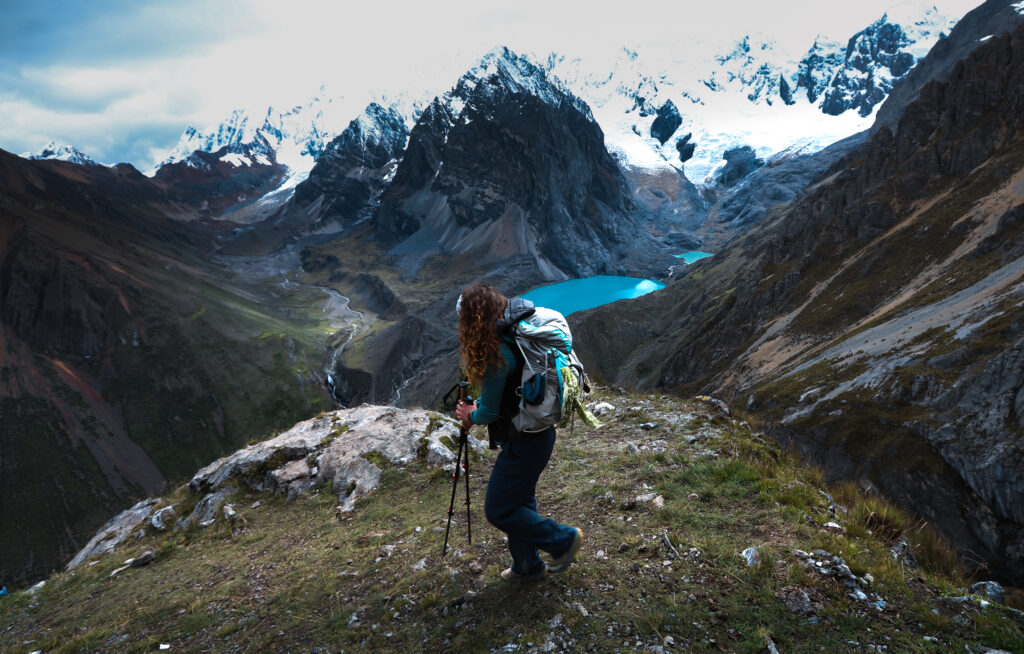
San Antonio Pass is one of the most breathtaking viewpoints in the Cordillera Huayhuash- for more than one reason.
At approximately 5,000 meters (16,400 feet), the pass opens onto an extraordinary panorama of towering snow-covered peaks, glaciers, turquoise lakes and deep Andean valleys.
From the top, trekkers can look toward some of the giants of the range, including Yerupajá and Siula Grande, while far below the brilliant blue waters of the surrounding glacial lakes create one of the most dramatic landscapes of the entire trek.
The climb is demanding, but the view from the pass is an unforgettable reward.
JAHUACOCHA VIEWPOINT
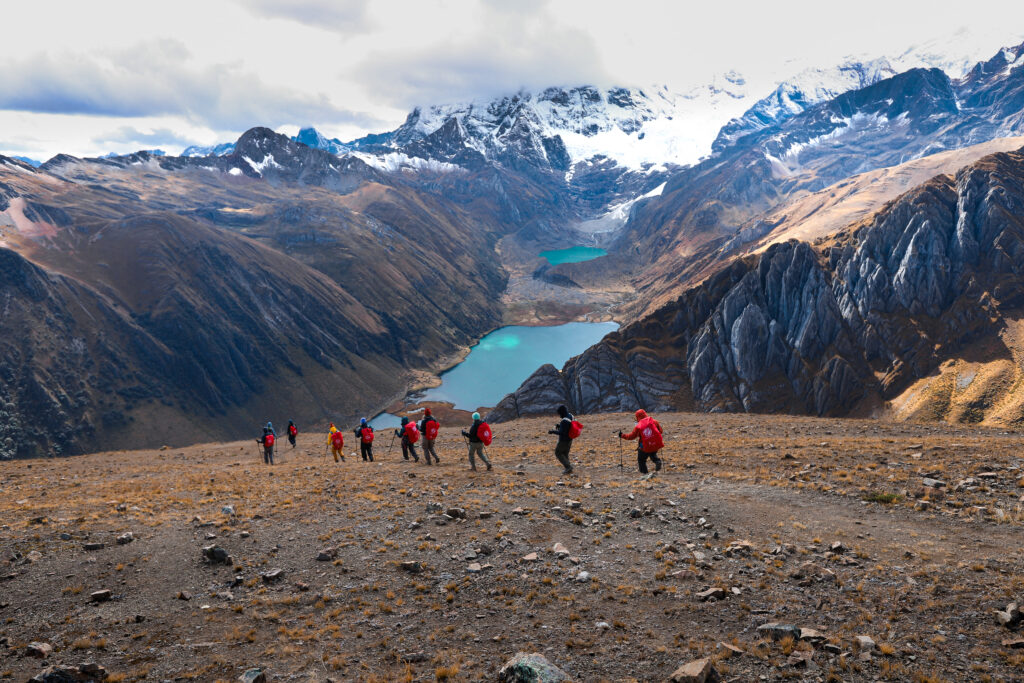
Jahuacocha Viewpoint is one of the perfect late-trek rewards.
The trail opens onto a sweeping view over Laguna Jahuacocha, framed by the dramatic western peaks of the Cordillera Huayhuash.
It feels different from some of the higher, harsher mountain passes. Here, the landscape opens up beneath you, bringing the blue lake, green valley, and snow-covered mountains together in one enormous panorama.
After days of crossing high passes, it’s one final reminder of just how extraordinary this little corner of Peru really is.
Is the Cordillera Huayhuash Worth It?
If you love mountains, remote landscapes, challenging hikes, and places that still feel genuinely wild, yes—the Cordillera Huayhuash deserves a place on your Peru trekking bucket list.
But Huayhuash is not an easy trek.
You’ll spend multiple days hiking at high altitude, cross passes approaching or exceeding 5,000 meters, sleep in remote campsites, and experience quickly changing mountain weather.
That challenge is also part of what makes the experience so memorable.
You aren’t simply arriving at a famous viewpoint for a photograph.
You’re walking through the landscape.
And after eight days surrounded by these mountains, lakes, villages, animals, and valleys, Huayhuash has a way of sticking with you.
Your bucket list called. It says this is exactly what it had in mind.
Trek the Cordillera Huayhuash With First Step Expeditions
When you hike the Huayhuash Circuit with First Step Expeditions, we take care of the complicated parts—permits, transportation, camping equipment, meals, and trekking logistics—so you can concentrate on the experience.
We are a local Peru trekking company specializing in remote Andean adventures, including the Cordillera Huayhuash Circuit and off-the-beaten-path treks such as the Vilcabamba Trail.
Safety is central to the way we operate. Our guides are trained in first aid and know these trails, mountains, communities, and changing conditions.
We also believe that a great Huayhuash trek isn’t only about reaching the next campsite. It’s about slowing down enough to appreciate where you are, learning about the communities and landscapes you’re traveling through, and experiencing a part of Peru that relatively few visitors ever get to see.
After all these years trekking in northern Peru, Huayhuash is still one of the places we never get tired of coming back to.